 Pauliina Flam
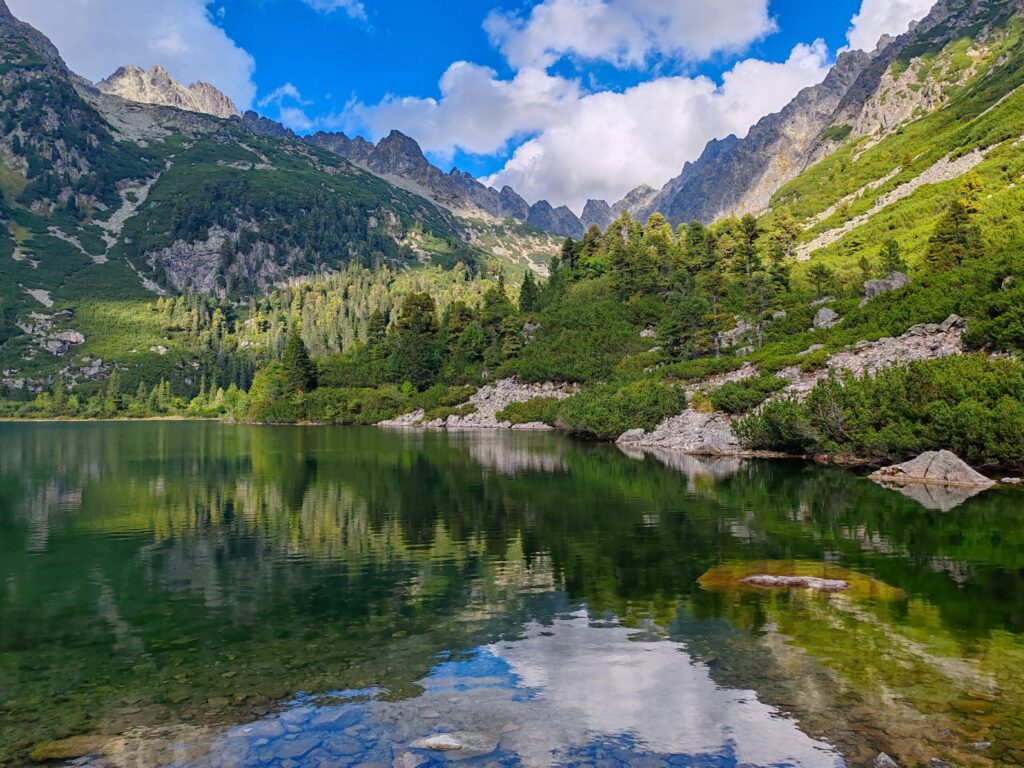
Welcome to my favorite place on earth. Here I’ve met unforgettable people and spent some of my best moments in solitude—sipping raspberry tea, watching the mountains fade into darkness as the sun sank behind them. Here I’ve had near-death experiences and the most beautiful hikes. Here I’ve found places of spiritual depth and tasted the clearest water—so pure it seemed to carry the flavor of blueberries. This is Popradské Pleso, a lake hidden in the Tatra Mountains of Slovakia.
Štrbské Pleso: tips
Štrbské Pleso is a great starting point for hikes in the Tatras, and it’s worth taking a few minutes here to get ready. First of all, there’s a supermarket right in front of the train station—perfect for grabbing snacks (or anything else you might need).
Another useful thing: you can leave extra luggage at the train station. Since I usually visit the Tatras as part of a longer journey, I always drop off my big backpack here and head into the mountains with a smaller one. Just ask the ticket seller to store your things—it costs €3 for the first day, and you pay the rest when you pick your stuff up. The luggage limit is 10 kg, and yes, they actually weigh it before taking it. After that, you’ll get a ticket. Keep it safe—I lost mine once, and it cost me extra time, money, and some very clumsy Google Translate attempts to get my bag back.
For a proper meal, there’s a small local eatery just under the train station, opposite the supermarket. They serve affordable dishes (around €7.20 for a two-course dinner). And just in case you need them, the station also has toilets (paid) and even a post office.
Štrbské Pleso – Popradské Pleso trail
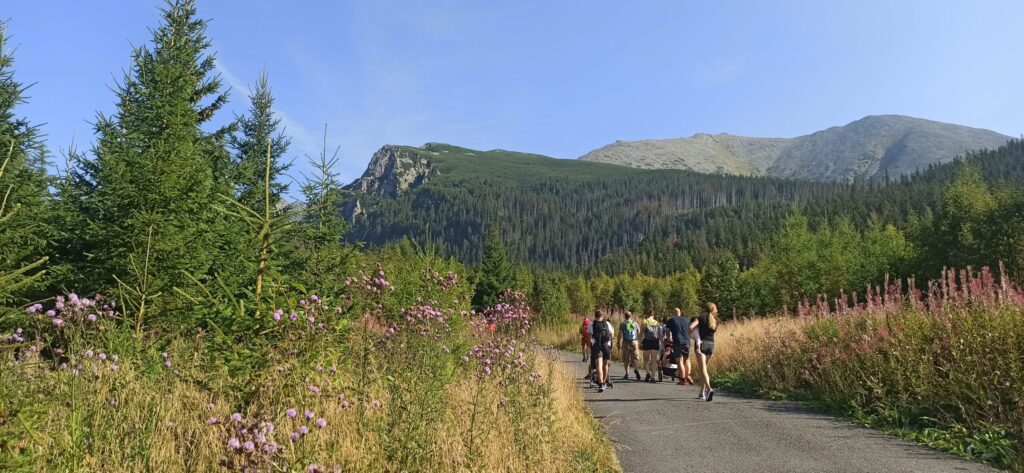
From the train station (on the supermarket side), follow the asphalt road to the right. The path leads past a few wooden statues and souvenir kiosks before reaching a parking lot. There are clear signs pointing the way toward Popradské Pleso—and yes, you won’t be the only one going there, it’s a popular spot.
After crossing the lot, you’ll see a hiking trail heading up through the forest, with another sign reminding you it’s about an hour from here. The path is rocky but never so much that you’ll need to scramble—it’s accessible, and many families walk it with kids. Still, steady shoes are a must. Along the way you’ll pass unusual rock formations and roots that twist across the path like something from a fairy tale. Peaks start appearing one by one until, at last, the trail rewards you with a sweeping mountain panorama.
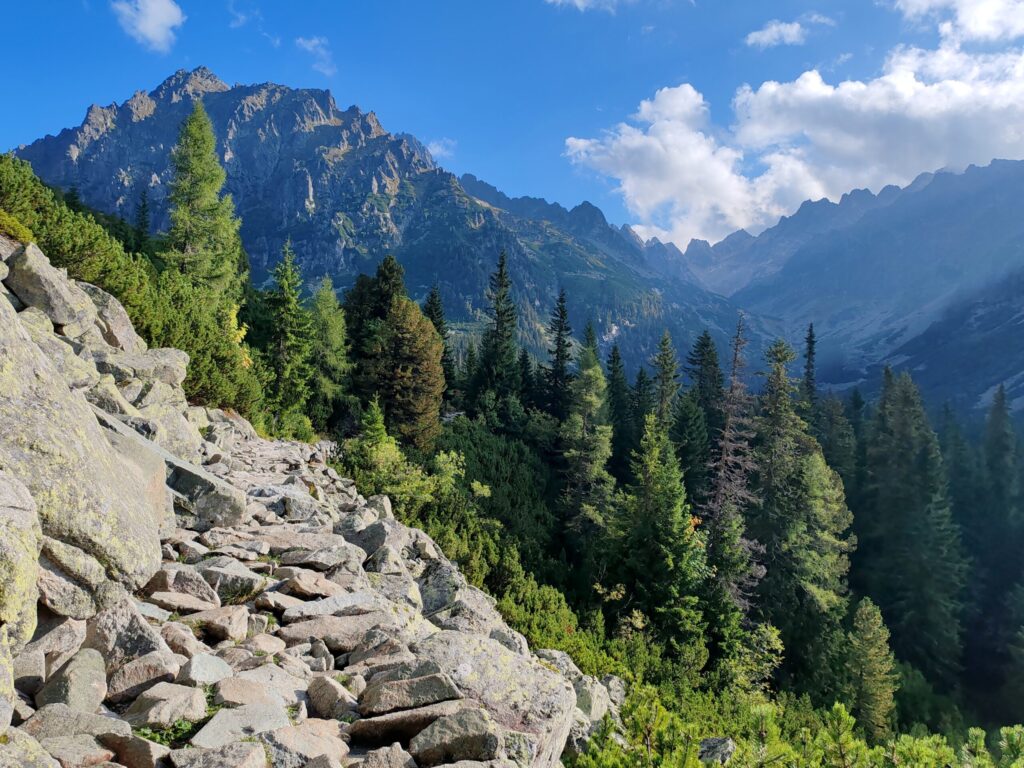
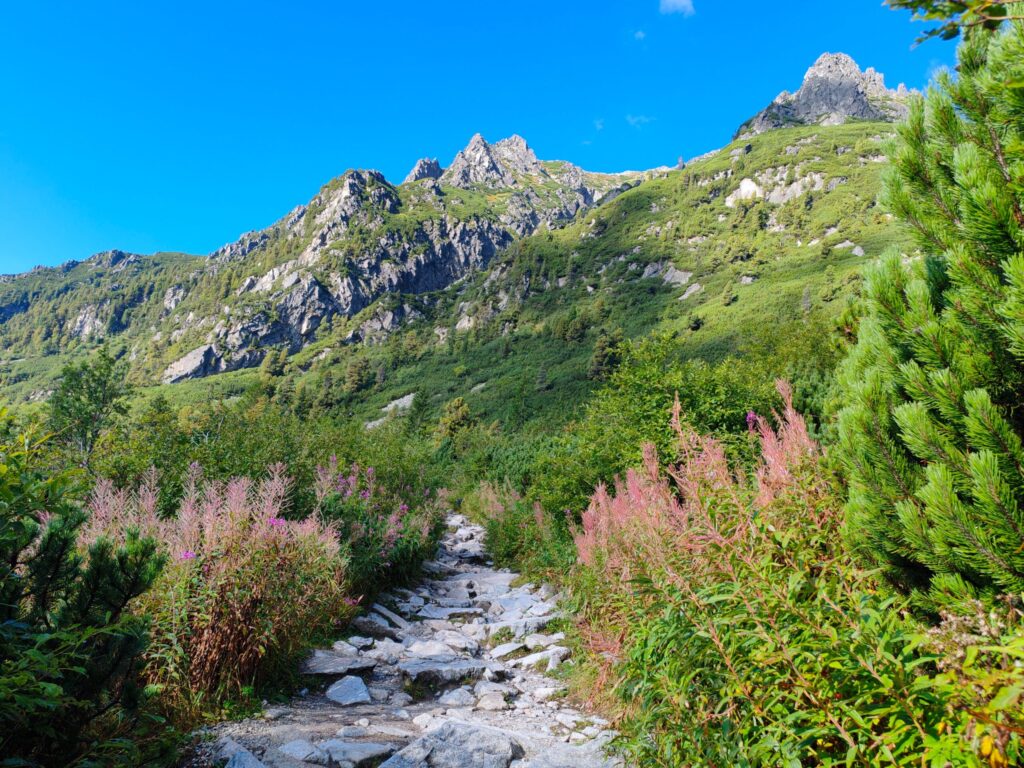
From there the path dips back into the forest. Cross a wooden bridge over a lively stream, and you’ll know you’re almost there. Soon you’ll reach a crossroads, and just beyond it are the mountain huts. Here you’ll also spot the asphalt road that connects to Popradské Pleso station, in case you came up that way.
Huts
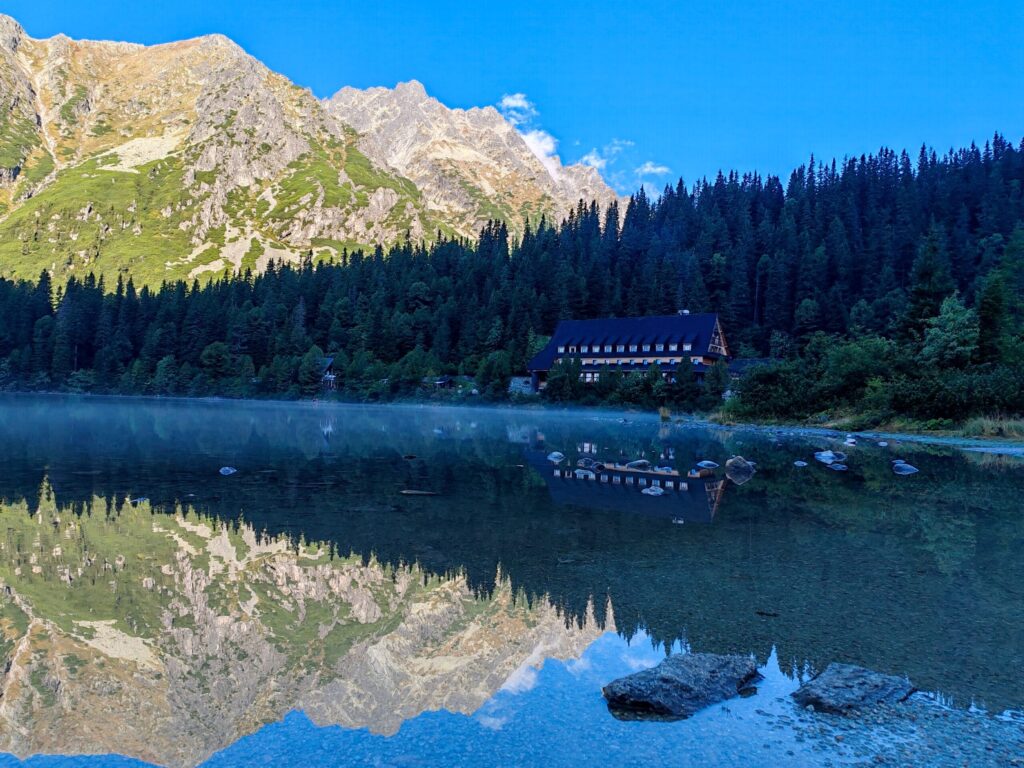
You’ll find two huts at Popradské Pleso. The smaller one, Majláthova Chata, offers food and drinks with outdoor seating. The larger wooden building is a hotel, with rooms ranging from €30–60 a night depending on season and day.
Guests here are mostly serious hikers and climbers, so the rhythm is early to bed, early to rise. Breakfast is served from 6:00–9:00, the kitchen closes at 21:00, and silent hours begin at 22:00. This isn’t just a polite suggestion—if you’re too loud after 22:00, you risk a €200 fine. Not kidding.
The restaurant serves hearty mountain meals—soups (the goulash is fantastic!) and local dishes. Beer is around €5, and there’s a terrace outside where you can also eat your own food. Breakfast is impressive: a big buffet with bacon, sausages, boiled and fried eggs, cereals, yogurts, desserts, vegetables, cheeses, cold cuts—and even sparkling wine, for anyone in the mood for a fancy morning.
Facilities are basic but functional. If you are staying in the dorm, the toilets are shared and usually a bit of a walk from your room. Showers are also shared, and boots are not allowed inside, so bring sandals or slippers (a relief for tired feet anyway). There’s a drying room, which is a lifesaver in mountain weather, and even a small wellness area with sauna, jacuzzi, and champagne.
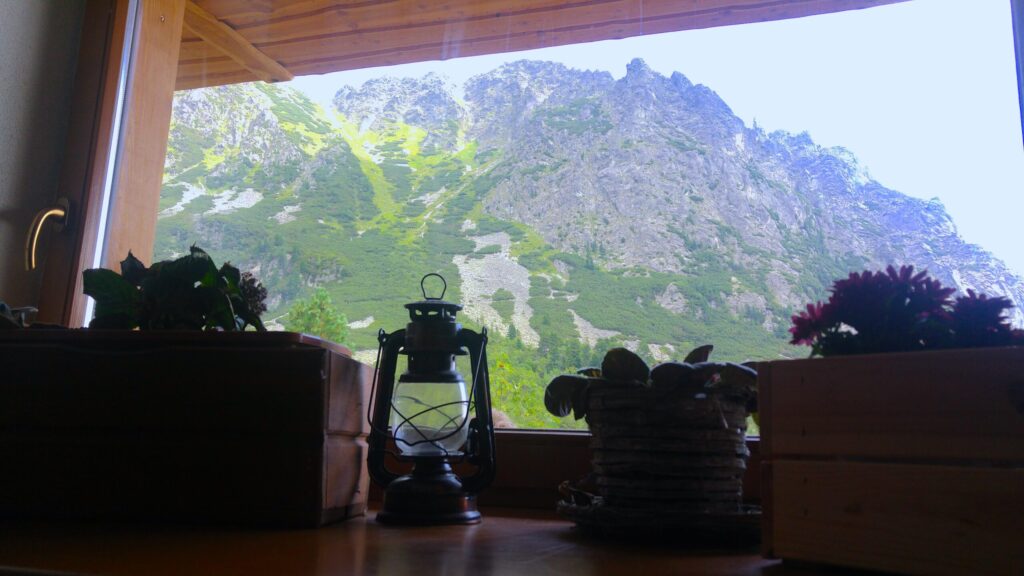

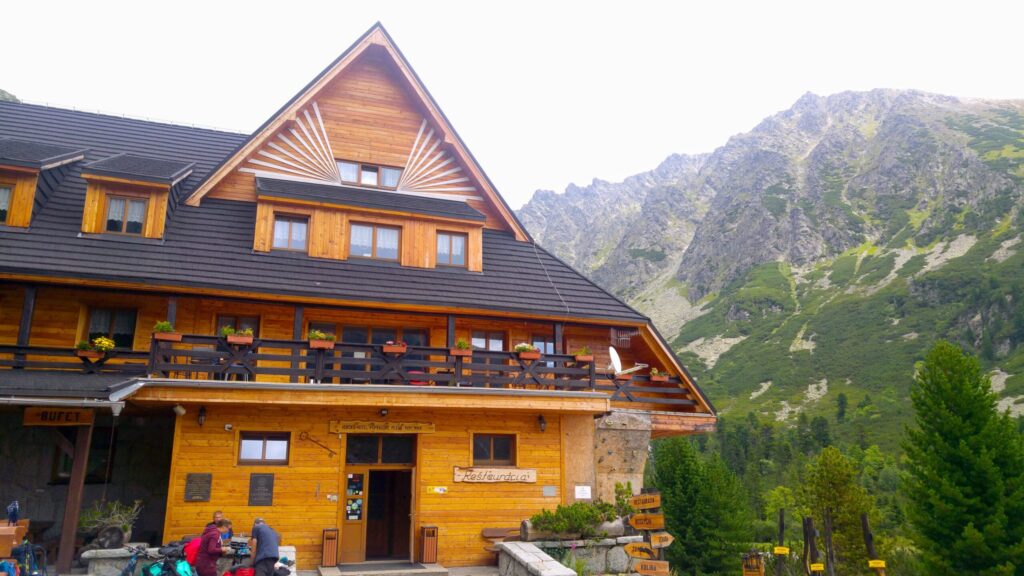
The hotel has changed a lot since my first visit, but it remains a hub for hikers. You can collect stamps for Popradské Pleso and the nearby Symbolic Cemetery (more on that later). At reception you’ll also find a screen with weather forecasts and descriptions of the various hikes that start here. Let’s take a closer look at those.
A Hike Around the Lake
One can take a hike around the lake—there’s a path all the way through. The beautiful green water turns mirror-like in the early morning and late evening, with a scenic hut standing by its shores. It looks lovely from absolutely every side, and it’s worth seeing it from all of them.
There are a few places where you can get down to the water, as well as some wooden bridges crossing little streams. No matter which way you go, peaks will rise up around you—some right from the lake, some further away beyond the forest line, but all of them near and mighty.
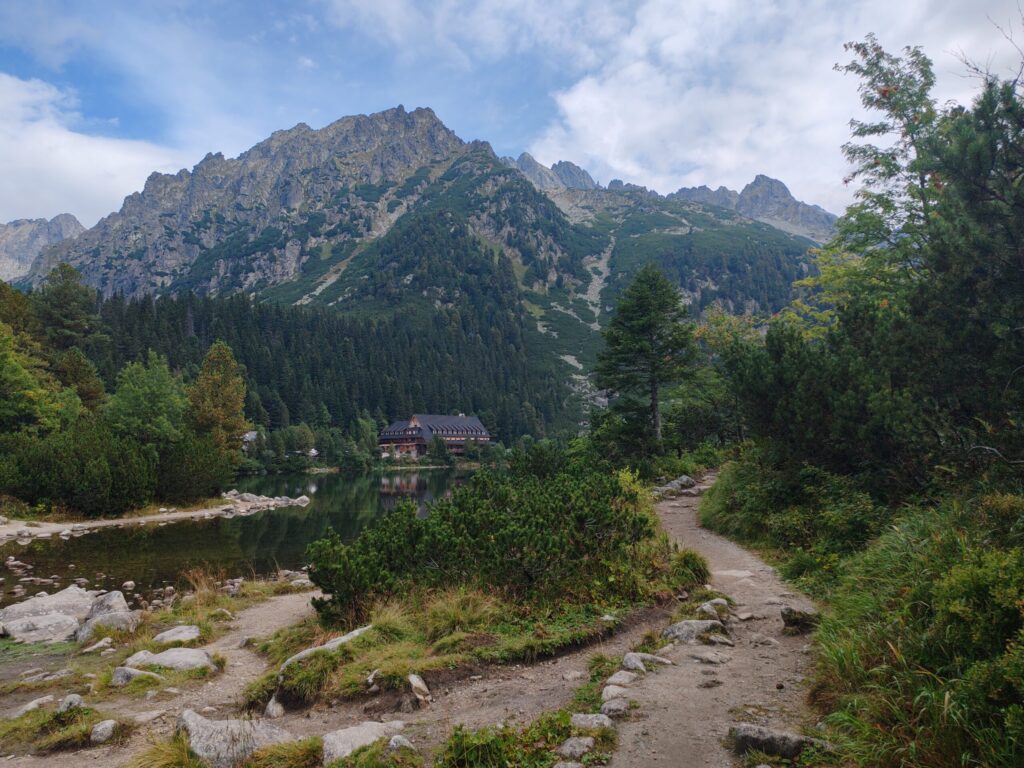
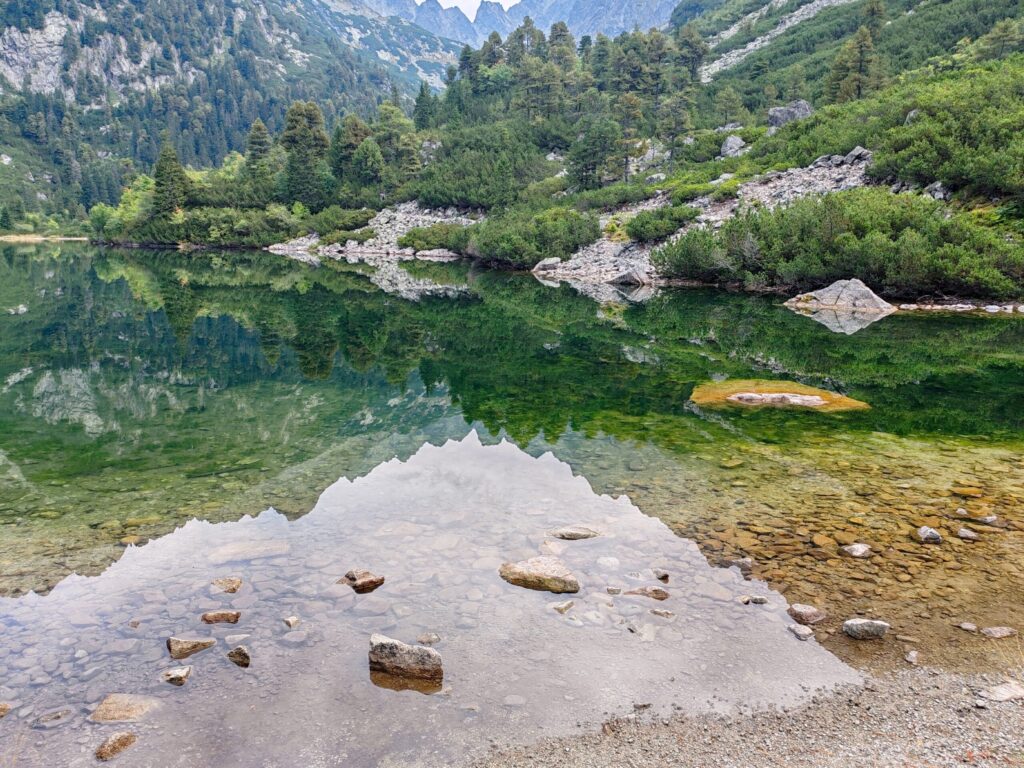
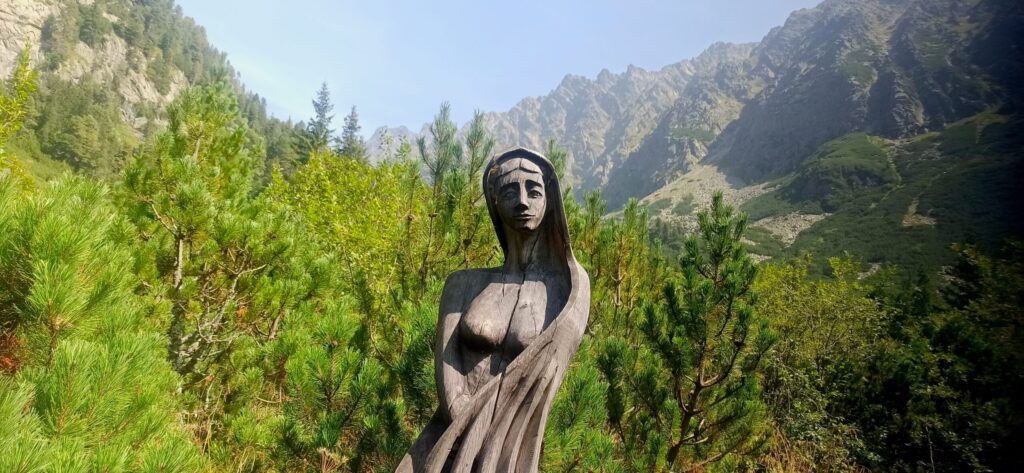
This is the kind of trail you can walk at any time—morning, to wake up with the mountains; evening, to unwind before sleep; right after arrival, to greet the place; or before departure, to say goodbye. The trail doesn’t have its own marked color, since circling the lake means following small parts of different routes. Along the way you’ll also find some of those peculiar local wooden figures I always love to spot.
Symbolic Cemetery
There is a 10-minute hike on the yellow trail that takes you up to an elevation of 1,525 meters, just above the lake. This path is marked with many hand-carved wooden crosses, because here lies a symbolic cemetery. There are no real graves or bodies buried here (as far as we know). Instead, it stands in memory of people who either died in the Tatras or were locals who lost their lives in other mountains.
The path climbs gently, and soon you find plaques set into rock walls: names, faces, flowers, words of memory.It always reminds me of an old RPG game I played in school, Aveyond, where there were “cliffs of remembrance.” That is exactly how this feels. Except here, the stories are real: tragic stories, inspiring stories, beautiful lives lived.The cemetery has several sections and a small chapel. Above it rises a tall rock pointing into the sky, carrying plaques with the names of some legendary climbers. Even if you’re not into climbing history, you might recognize a few.
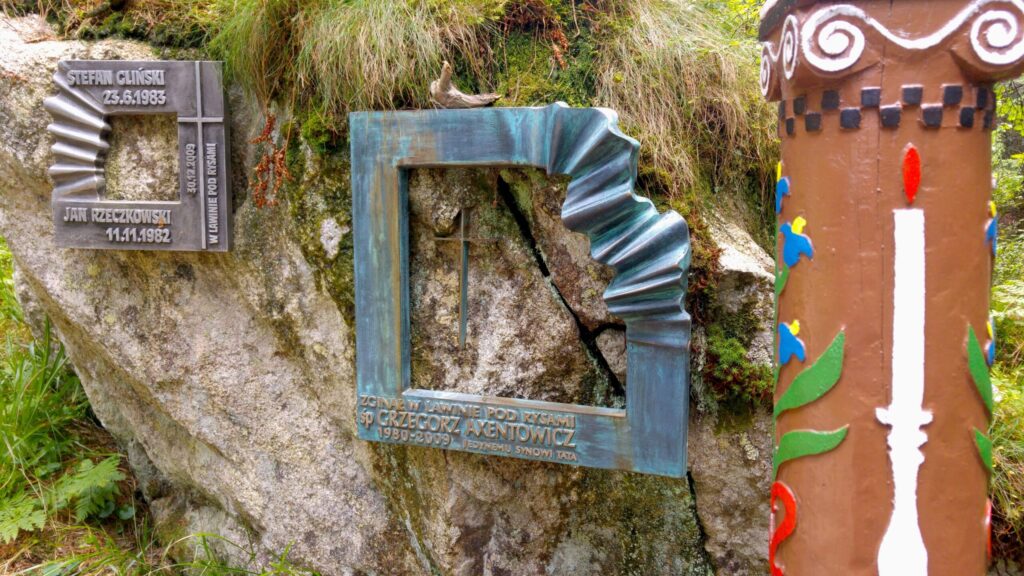
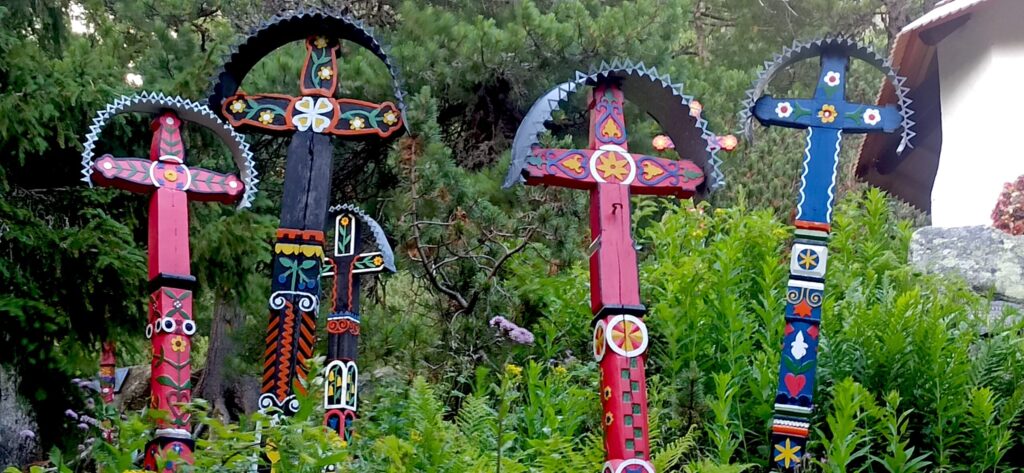
If you’d like to dive deeper into the stories, I’ve shared more in a separate blog post and in a YouTube video where I uncover some of the names and lives remembered here.
Sedlo Pod Ostrvu
Right above the lake you’ll notice a beautiful mountain. If you look closely, you can spot the zigzagging trails across its slopes—and most likely see tiny figures moving along them. That’s the path to Sedlo Pod Ostrvu.
The hike takes about an hour and a half according to the sign (always consider your own pace, weather conditions, and the time you’ll spend taking pictures—you’ll probably end up taking plenty even if you don’t plan to). “Sedlo” means a saddle between peaks, and that’s exactly where you’ll be heading.
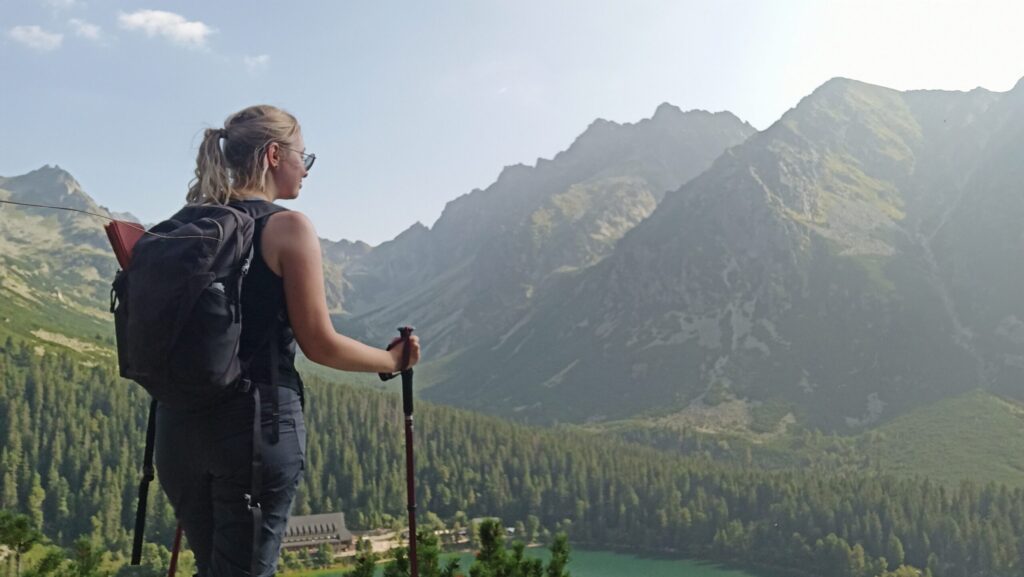
As you climb, the view of the lake grows wider and more breathtaking, the hut below looks smaller and smaller, and the number of peaks around you multiplies. It’s an enchanting trail. From the top you’ll see the valley and even the town spread out beyond the ridge. You can also continue further east into the mountains, or loop around to approach the lake from the opposite side. But really, this is the last trail where you could possibly get lost—there are literally no other paths to confuse it with.
Rysy
This is the most famous hike in the area. The red trail leads you up to a mountain hut nestled in the most epic surroundings. From there, it’s a bit of a scramble to reach the top. Actually, Rysy has several summits, and one of them marks the highest point in Poland.
The trail itself isn’t overly technical—there are some chains and stairs to help with the steeper sections—but it can get very crowded. Be prepared for “traffic jams” on the way up or down, since it’s a two-way path.
To really enjoy Rysy, you need a bit of luck: luck with the weather (to actually see the views instead of standing inside a cloud) and luck with the crowds (to have the peaks to yourself, at least for a moment).
You can also approach Rysy from the Polish side, which lets you cross the border and continue your journey into the Polish Tatras. The descent there is more challenging than the Slovak side, though.
As for me—when I planned to hike Rysy, one time it was too stormy, another time too crowded, so I chose quieter trails instead (and was glad I did). Still, they say the views from Rysy are worth every step
Koprovský štít
This is my favorite hike in the area. It starts from the same crossroads as Rysy—at one point the trail to Rysy turns right, while the blue-marked path to Koprovský štít waves left. On the way, there’s a stream where I usually refill my filter bottle (less water to carry, more space for snacks).
The valley here is beautiful, with a majestic lake and countless epic views that make you stop and wonder. Compared to Rysy, the crowds are smaller, which makes the trail feel calmer. I also enjoy the part where you cross the stream by hopping rocks—it’s a little Indiana Jones moment in the Tatras. Both times I hiked here, I was lucky enough to spot chamois (mountain goats) climbing the slopes.
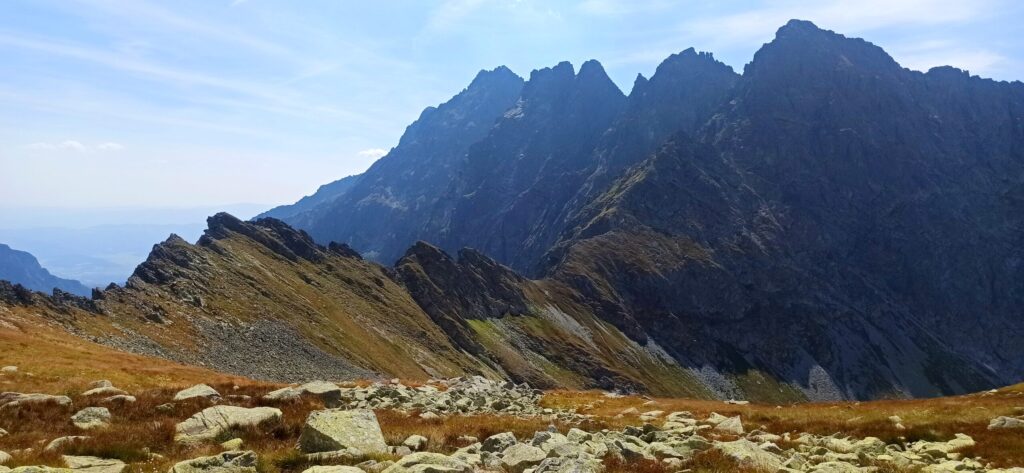
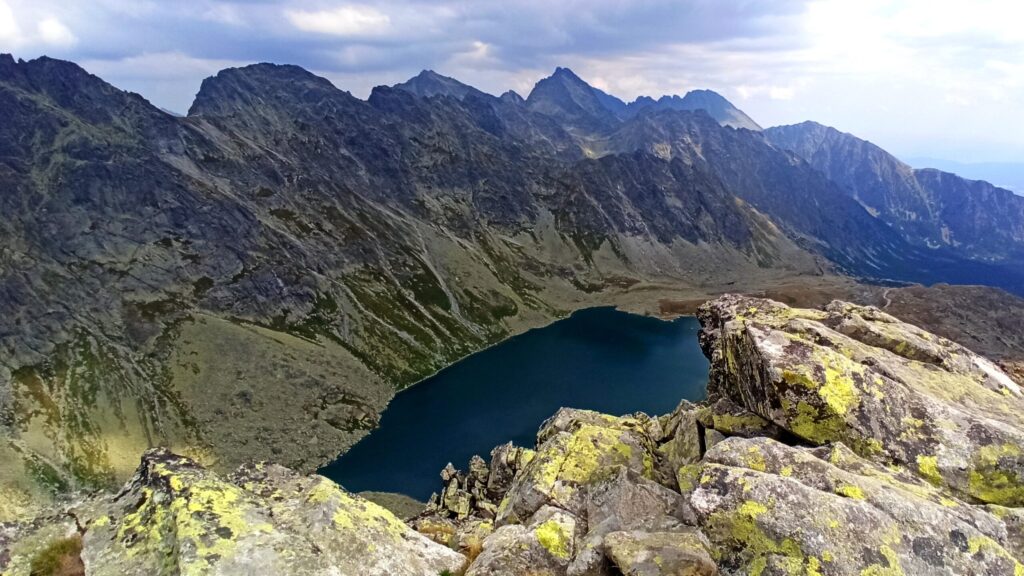
I also had a near-death experience on this peak once (you can read more about that in another blog post). But even so, this trail is one I keep returning to. There are so many beautiful spots along the way that reaching even part of it feels like an accomplishment. If the weather turns suspicious, you can shorten the hike by heading only as far as Hincovo pleso, the largest and deepest glacial lake in the Slovak Tatras, lying at 1,946 meters.
In a Nutshell
This is Popradské pleso: good food, determined people, unpredictable weather, mountain safety written into every step, and countless moments of beauty tucked between peaks and forests.
Fun fact: Popradské pleso itself is a glacial lake, formed thousands of years ago during the Ice Age. It sits at 1,494 meters above sea level, stretches across 6.88 hectares, and reaches a depth of almost 18 meters. Its clear, cold waters have witnessed generations of hikers, climbers, and dreamers passing by—each leaving with their own story. And mine is this: every time I leave I know I am gonna come back.